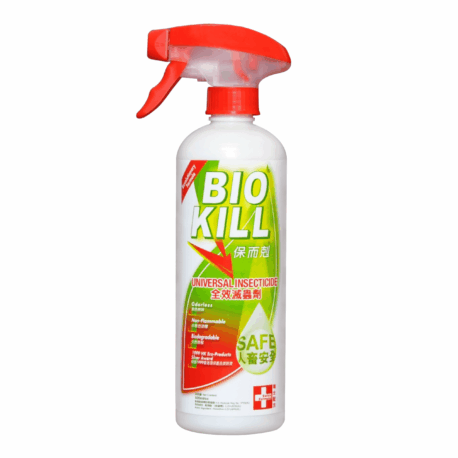
Constantly spotting tiny, fuzzy little flies in your bathroom? Despite trying various insecticides, they keep popping up on your walls or around the floor drain. These weak-flying, hairy insects are actually moth flies. Learn to identify their key characteristics and source, and master the steps to get rid of them. Combined with the virtually odorless, preventative BioKill insecticides, you can effectively eliminate and prevent moth flies in your home!
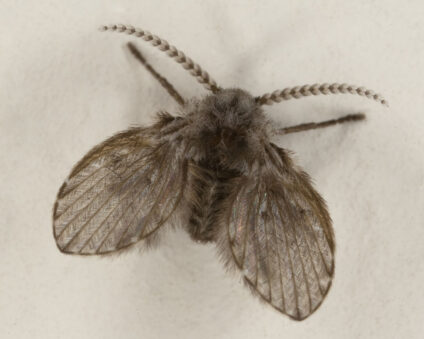
The entire body and wings of the moth fly are covered with tiny hairs, giving it a moth-like appearance. It generally looks like a small fly with fat wings however a closer look will reveal its unmistakable moth-like appearance. They are usually black in colour.
Biology
Drainage systems provide ideal environment for the larvae of moth flies to inhabit. The females fly into the drain holes and lay eggs on the slime built up inside the inner lining of the drainage pipes. Eggs and larvae embed themselves in the slime so they won’t be washed away. The slime also serves as a food source for the larvae. Apart from slime, fallen hairs, food pieces or other organic matter accumulated inside the sinks or floor drains can also provide food and protection for the flies. The larvae complete their development in about 1 to 2 weeks. The lifespan of adults is about 2 weeks.
According to information from the Food and Environmental Hygiene Department (FEHD), moth flies may also breed in outdoor environments. For example, plant saucers, air conditioner drip pans, clogged surface channels are potential larval habitats.
Why Do Moth Flies Keep Returning? The Key is Treating the Breeding Source
There are always hairs, dead skin, soap residue and other organic matter washing into drains during daily bathing and cleaning. Over time, this material can form a moist biofilm inside drains, traps and overflow pipes, providing food and shelter for moth fly larvae. Spraying insecticide in the bathroom may reduce flying adults, but it will not solve the problem if the breeding material remains. The most reliable control is to find and physically remove the larval habitat, then keep drains clean so new biofilm does not build up.
Two-Step Moth Fly Control: Source Treatment + Long-Term Prevention
Step 1: Locate and Eliminate Breeding Sites
Inspect shower drains, basin drains, kitchen sink drains, floor drains, overflow openings, cleaning tools such as mops and buckets, air-conditioner or refrigerator drip pans, and other damp areas where organic matter can collect. Use a stiff brush or suitable drain-cleaning tool to scrub the inner walls of drains and traps and remove accumulated biofilm. Where appropriate, use a drain cleaner or enzyme-based drain maintainer according to the product label to help keep drains free of organic film.
Step 2: Long-Term Prevention
Keep drains flowing freely and remove hair, sludge and other organic matter regularly. Hot water or drain-cleaning products may help with routine maintenance, but heavy biofilm often needs mechanical scrubbing. BioKill insecticide can be applied to surrounding resting areas, such as around drainage points, under cabinets and corners, to help reduce adult moth flies, but it should be used as a supplementary measure after the breeding source has been cleaned
Essential for HK Homes: BioKill Insecticides - Kill & Preventive Action

Why Choose BioKill:
- BioKill insecticides carry the “CAUTION” label and are “POISON” label exempt by the Hong Kong Agriculture, Fisheries and Conservation Department (AFCD).
- Supplementary prevention: BioKill’s broad-spectrum formulations help eliminate common household pests such as cockroaches, mosquitoes, flies, ants, fleas, moths, mites, beetles and more. For moth fly problems, apply it to surrounding resting surfaces after removing the breeding source. Residual effectiveness may last up to 3 months, depending on surface conditions, cleaning frequency, moisture and infestation level.
- BioKill Insecticides are virtually odorless and contain no added artificial fragrances.
- BioKill Insecticides are water-based and non-flammable, making them safe to apply in the kitchen. Once dried, you can resume your normal daily cooking activities.
Where to Spray BioKill? Application Guide
- Surface Application
Apply along baseboards, around door and window frames, behind and under refrigerators, sinks, cookers, shelves, drawers. Apply in cracks & crevices where pests crawl and hide and onto any surface flying insect may rest. - Evenly Spray the Surface
Spray surface until moist but not to the point of run off. Once dried, it acts as a contact insecticide and repellent for pests. - Reapply Regularly
Reapply regularly especially during hot and humid seasons, after mopping the floor, and after rainfall. - Resolve the Breeding Source
When the breeding source of an infestation has not been resolved, the insects will keep appearing and die after contacting the insecticide. Therefore, a clean environment always helps us to treat and control insect problems.
FAQ
Insecticides can help reduce adult moth flies resting on treated surfaces, but it cannot reliably eliminate an infestation on its own because larvae develop in the organic biofilm inside drains, traps and other damp breeding sites. The key treatment is to locate and clean the breeding source by removing the slime and debris. After cleaning, apply BioKill insecticide to surrounding resting areas as a supplementary control for adult moth flies.
Do not wipe treated resting surfaces immediately after application, as the residue needs to remain on the surface to work. However, drains and drainage points still need regular cleaning because moth fly larvae develop in the biofilm inside pipes and traps. In shower zones that frequently get wet, apply BioKill only after surfaces are dry and reapply as needed after washing, mopping or heavy moisture, following the product label.
Some adults may already have emerged before treatment, and there may be more than one breeding site. Continue checking drains, overflow openings, drip pans, mop buckets and other damp areas with organic buildup. Once the breeding sources are removed and drains are maintained, the number of moth flies should decline. BioKill can help control adults on treated resting surfaces, but ongoing cleaning is needed to prevent recurrence.
BioKill insecticides only carry the “CAUTION” label and are “POISON” label exempt by the Hong Kong Agriculture, Fisheries and Conservation Department (AFCD). Widely applied across local hospitals and kindergartens, families with kids can choose from these options:
Micro-Fast Insecticide (Green):
- Ideal first choice for everyday pest control.
- Uses the latest patented microencapsulation technology, has UV protection and controlled release of the active ingredient, which achieves greater efficacy and increased safety.
- Suitable for indoors and out and suits wet areas like kitchens and bathrooms. Residual effect up to 3 months*.
Universal Insecticide (Red):
- Effectively kills common household pests.
- Formulated specifically for indoor use. Residue effective up to 4 weeks*.
Anti-Mite Spray (Purple):
- Formula specially targets mites and other insects thriving on fungi such as booklice and springtails.
- Ideal for applying on bedding, on pillows, mattresses, carpeting and upholstered furniture. Residual effect up to 4 weeks*.